HYDRO EXCAVATION & ENVIRONMENTAL SERVICES
Careers24-hour emergency response772.220.9900
Envirocon Solutions, Inc. — A Casco Company
Home/ Services

Services

The right capability.
For the task at hand.

From precise utility exposure to industrial cleaning, explore the services that help create access, remove material and support your next stage of work.

Talk with our team
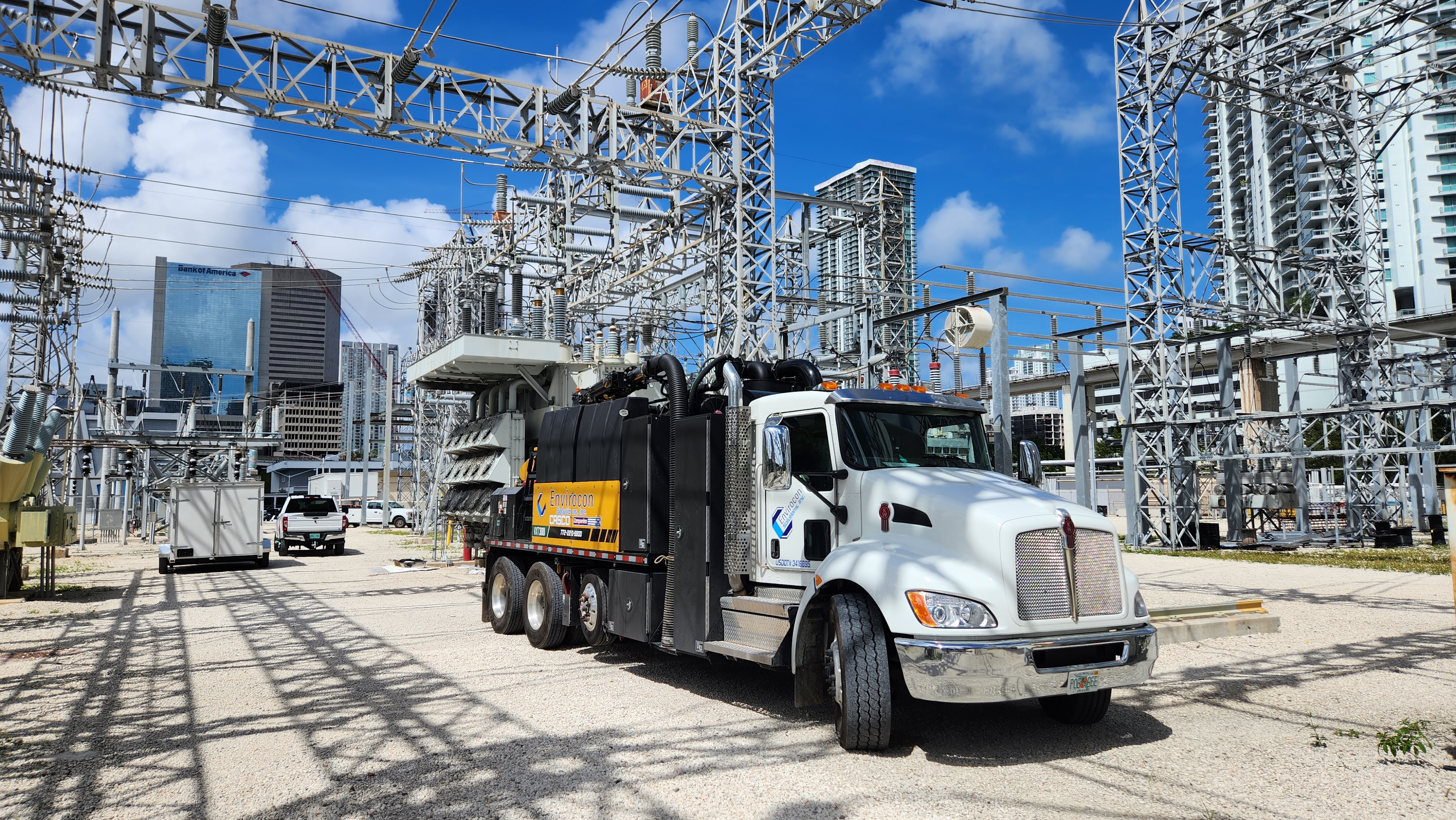
Envirocon equipment and field operations
EXPLORE SERVICESExcavation & utility support ↓Industrial & environmental services ↓Locating & site services ↓

UNDERSTAND THE APPROACH

Hydro excavation.
A targeted way in.

Water loosens the soil. Vacuum equipment removes it. The result is focused access to the area your project needs.

Hydro excavation is used for utility exposure, access pits, trenching and support around underground infrastructure. It offers a controlled alternative to conventional mechanical digging for appropriate applications.

The best method depends on the ground, the work area and the services already present. We’ll discuss those conditions with you when reviewing the scope.

01 / CAPABILITIES

Excavation & utility support

Expose what matters. Create the access your project needs.

Discuss this service

Precision non-destructive excavation

Expose underground infrastructure with a controlled approach that limits mechanical digging around buried services.

Useful when a project needs to uncover a specific service or create a defined opening rather than excavate a broad area. Discuss the location of existing infrastructure and required access with our team.

Soft dig

Use vacuum-assisted excavation to remove soil in areas that call for a careful approach.

A practical option for focused access in areas with existing services or limited room to work. The excavation method is selected around the actual site conditions.

Hydro excavation

Combine pressurized water and vacuum removal to break up and extract soil.

The loosened material is collected through the vacuum system, creating access for inspection, repair or installation work. Soil, depth, access and disposal requirements all inform the scope.

Potholing / daylighting

Create targeted openings to expose buried utilities and help confirm their location and depth.

Commonly used before crossings, repairs or new installations where visual confirmation of an existing service is needed. Coordinate the exposure points with your project team.

Slot trenching

Excavate narrow trenches for utility access, investigation or installation support.

Discuss the length, width and purpose of the trench so the team can assess the work area and equipment access. Suitable planning also accounts for surrounding services.

Drill & bore support

Provide access holes and excavation support for drilling and directional boring activities.

Access at entry, exit or investigation points can support the wider bore operation. Share the drilling plan, anticipated ground conditions and coordination needs.

Service pits

Create focused access areas for underground connections, inspections and repairs.

Targeted openings can provide room to inspect, connect or repair underground infrastructure. Outline the working area and the access your trade requires.

Pole setting

Prepare excavation and site access to support pole installation work.

Discuss the proposed pole positions, buried services and installation requirements. Excavation support is coordinated with the wider pole installation scope.
02 / CAPABILITIES

Industrial & environmental services

Clear the buildup. Support the next stage of work.

Discuss this service

Emergency spill response & containment

Provide vacuum and field support for containing and removing spilled materials. Call to discuss the situation.

Share what has spilled, where it is located and what is happening on site. Time-sensitive requests should be made by phone so response requirements can be discussed directly.

Debris & sediment removal

Remove accumulated materials from accessible work areas, drainage structures and industrial applications.

Buildup can limit access and affect drainage or maintenance work. Describe the structure, material and access conditions so removal needs can be reviewed.

Pipe clearing & jetting

Use water jetting and removal support to help clear buildup and obstructions in pipes.

A project may involve accumulated sediment, deposits or other obstructions. Pipe size, condition, access points and the material involved help determine the cleaning scope.

Tank cleaning

Support the removal of residual liquids, sediment and materials during tank maintenance.

Tell us about the tank, its contents and the maintenance objective. Access, residual material and handling requirements are reviewed before the work is scoped.

Confined space operations

Coordinate cleaning and maintenance support for work within restricted-access environments.

Restricted-access work needs a site-specific discussion of the space, material and operating requirements. Contact the team to review the proposed task and coordination needs.

Environmental cleanup

Assist with the removal of materials during site cleanup and environmental response projects.

Cleanup requirements vary with the material and location. Share available site information so the appropriate removal, handling and project coordination can be discussed.

Catch basin clean-out

Remove accumulated sediment and debris to support drainage-system maintenance.

Removing accumulated material helps restore usable capacity in drainage structures. Identify the affected basins, access points and any recurring drainage concerns.

03 / CAPABILITIES

Locating & site services

Understand the site before the next move.

Discuss this service

Utility locating & clearing

Help identify underground service locations and expose selected areas for further investigation.

Locating and targeted exposure support a better understanding of existing infrastructure. Share available plans and identify the area that needs investigation.

GPR services

Use ground-penetrating radar investigations to help assess subsurface features and utility locations.

GPR uses radar responses to investigate features below the surface. Results depend on conditions, material and access, so discuss the survey area and the questions you need answered.

Roll-off services

Coordinate containers and material-handling support for construction, industrial and cleanup projects.

Container needs depend on the material, quantity, placement and schedule. The Casco group can discuss roll-off and related industrial support for your project.

Concrete scanning / X-ray inquiries

Discuss concrete investigation needs and identify the appropriate scanning approach for your project.

Share the slab or structure, proposed work and investigation objective. The team will discuss the available approach rather than assume every project needs the same technology.

FROM FIRST CALL TO PROJECT SCOPE

A clear way forward.

Good coordination begins with the right information. Here’s how to start a productive conversation with our team.

01

Tell us about the site.

Share the location, work area, access restrictions and the task you need to complete. Photos or plans can help explain the conditions.

02

Define the work.

Discuss the material, excavation or cleaning requirements, target schedule and other contractors involved. We’ll review the relevant services with you.

03

Confirm the next step.

Connect with the team on scope, equipment availability and quote details before scheduling. For urgent response, call us directly.

YOUR NEXT PROJECT STARTS HERE

Tell us what’s ahead.
We’ll talk through the solution.

Share your scope, location and schedule with the Envirocon team.

Request a quote772.220.9900

CAREERS / CASCO ENVIROCON GROUP

LET’S MEET.

Send your application directly to the Envirocon team. Include your relevant experience; the team can request a résumé when following up.